AI-Powered Digital Twins for Smarter Industrial Operations

Industrial teams do not need another disconnected dashboard. They need a shared operational model that helps engineers, operators, trainers, and remote experts see what is happening, understand why it matters, and decide what to do next.
That is where AI-powered digital twins are becoming important. A digital twin gives teams a live model of equipment, process logic, facility context, and performance data. AI adds prediction, recommendations, natural language assistance, and workflow guidance so the twin becomes useful in daily decisions, not just executive reporting.
For companies exploring industrial XR, immersive training, virtual prototyping, AI avatars, and connected operations, this shift is practical. The goal is not a futuristic showpiece. The goal is a working environment where people can train, troubleshoot, collaborate, and improve decisions with clearer context.
Table of Contents
Why AI-Powered Digital Twins Matter Now
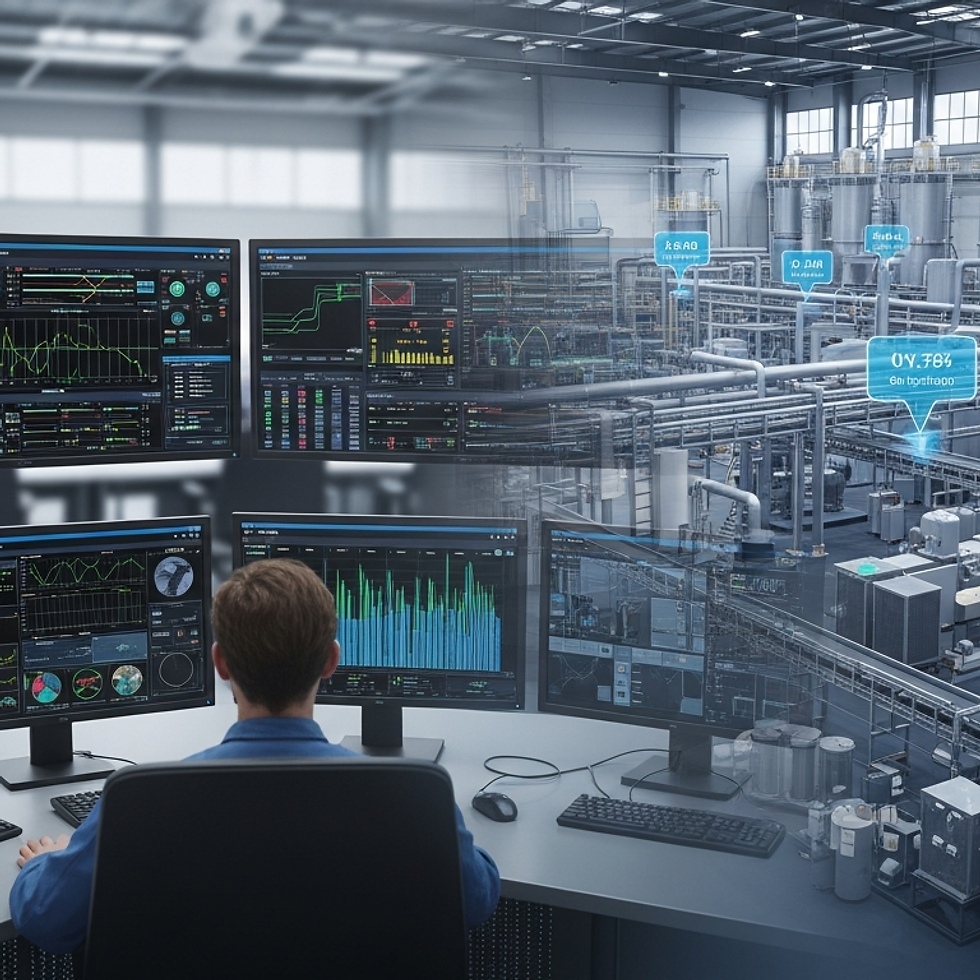
Industrial operations have become too connected for single-screen monitoring. A delay in one system can affect quality, safety, labor planning, customer commitments, and maintenance scheduling. When each team sees only its own slice of the operation, decisions become slower and more reactive.
An AI-powered digital twin helps by connecting asset context, process state, training content, and operational history in one place. Instead of asking people to interpret scattered dashboards, the twin can surface likely causes, compare options, explain what changed, and guide next steps.
The value is strongest when decisions are frequent, expensive, and time sensitive: downtime triage, quality drift, safety readiness, production changeovers, remote expert support, and training for rare but critical procedures.
What Changes When AI Avatars Join the Twin
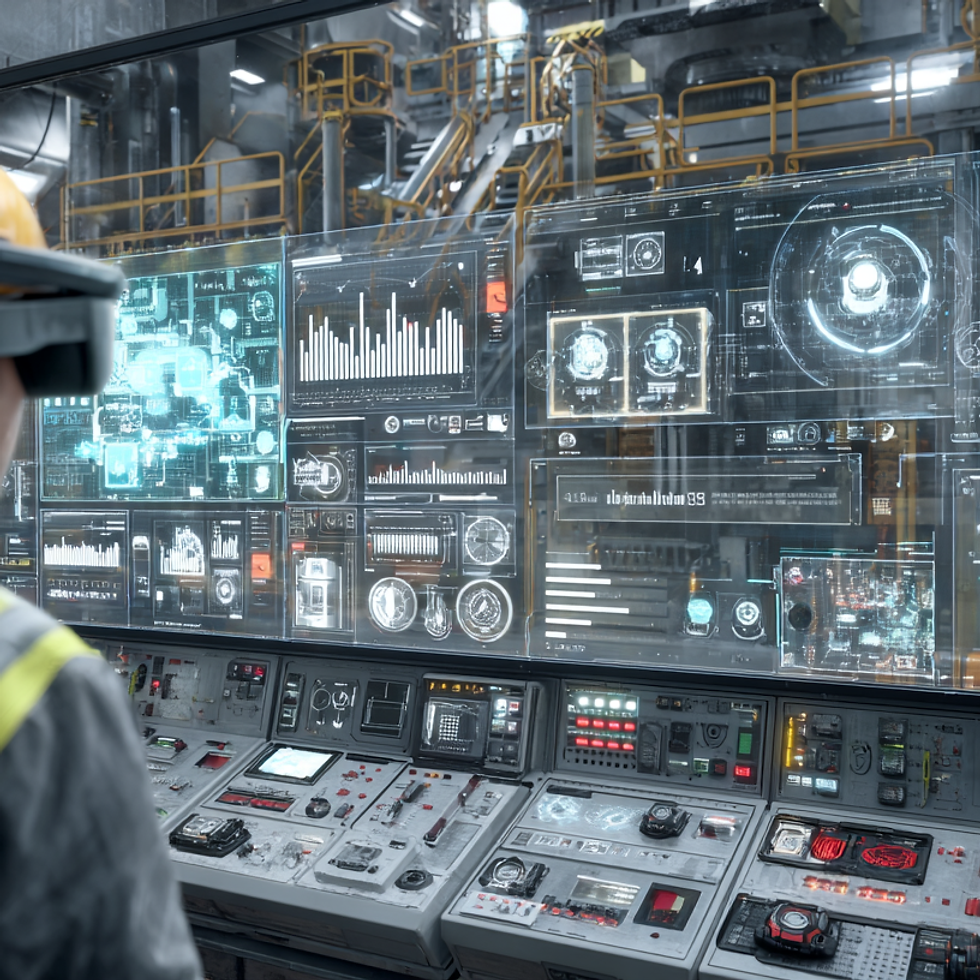
Digital twins become more usable when people can ask questions in natural language. An AI avatar or digital assistant gives operators and managers a conversational way to interact with complex operational context.
A technician might ask why a line is slowing down. A supervisor might ask what changed since the last shift. A trainer might ask which scenario best prepares a new hire for a safety procedure. The assistant does not replace expertise; it shortens the distance between data, context, and action.
Static Models vs AI Digital Twin Operations
A static 3D model explains shape and layout. A dashboard explains status. A simulation explains one scenario. An AI-powered digital twin combines these layers so teams can inspect the current state, replay past behavior, compare possible actions, and connect the result to training or field guidance.
That difference matters because industrial work rarely happens in a straight line. A single issue may require maintenance data, sensor readings, SOPs, training records, engineering drawings, and remote expert input. The stronger twin makes that context easier to reach.
Industrial Use Cases for Connected Teams

The most useful starting points are tied to real operational friction. Maintenance teams can use a twin to investigate downtime patterns and rehearse repair steps. Quality teams can compare live conditions against known defect signals. Safety leaders can turn rare incidents into repeatable VR training scenarios.
Engineering and training teams also benefit. A prototype can become a collaboration environment before it becomes a physical asset. Later, the same model can support onboarding, remote reviews, AR work instructions, and operational improvement.
Implementation Steps and Data Requirements

A strong implementation begins with one expensive repeat decision. Choose a workflow where better context can reduce downtime, mistakes, training time, inspection delays, or escalation costs. Then define the model scope, required data sources, update frequency, user roles, and the decisions the system should support.
The data does not have to be perfect on day one. Many teams start with asset models, process documentation, SOPs, maintenance records, training content, and selected operational signals. The twin becomes more valuable as the model, AI assistant, and XR experience are refined around the decisions people actually make.
Mistakes, KPIs, and Responsible AI
The biggest mistake is building a visually impressive twin with no clear operational owner. Another common mistake is trying to model everything before proving value in one workflow. Teams should track practical KPIs such as time to diagnose, training completion, inspection consistency, safety readiness, downtime reduction, and fewer escalations.
Responsible AI also matters. Recommendations should be explainable, reviewed by domain experts, and tied to approved operating procedures. The best systems make people faster and better informed while keeping accountability clear.
Future Trends for Industrial XR and Digital Twins
Industrial digital twins are moving toward shared 3D operational spaces where engineers, operators, managers, and remote experts review the same model, simulate options, train on procedures, and ask AI assistants for context inside one connected environment.
Training will also become more measurable. VR safety training, AR work instructions, AI assistants, and digital twins will share more context, helping teams rehearse rare situations and carry the same logic into real work.
FAQs
What is an AI-powered digital twin?
An AI-powered digital twin is a live digital model of an industrial asset, process, facility, or workflow that uses data, simulation, and intelligence to support monitoring, prediction, training, and decision-making.
How is it different from a normal digital twin?
A basic twin may show layout, asset state, or historical data. An AI-powered twin adds pattern recognition, recommendations, natural language assistance, and workflow guidance so teams can act faster.
Where should industrial teams start?
Start with one expensive repeat decision, such as downtime triage, quality drift, maintenance planning, or safety training. A focused twin usually proves value faster than a broad model of everything.
Can AI avatars work inside digital twins?
Yes. AI avatars can give users a conversational interface for asking questions, reviewing procedures, explaining status, and guiding training or troubleshooting inside an immersive environment.
What data is needed for a useful digital twin?
Useful starting data often includes asset models, SOPs, process documentation, maintenance history, training content, sensor readings, inspection results, and the operational rules experts already use.
How does XR improve digital twin adoption?
XR makes the twin easier to understand by placing people inside spatial context. Teams can inspect equipment, rehearse tasks, review scenarios, and collaborate around the same 3D environment.
How should success be measured?
Measure outcomes such as faster diagnosis, fewer repeat errors, reduced training time, improved inspection consistency, lower downtime, safer procedure rehearsal, and better remote expert collaboration.
Does a digital twin need to model the whole facility?
No. Many successful programs begin with one process, machine, line, or training workflow. The model can expand after the first use case proves measurable operational value.
Conclusion
AI-powered digital twins are becoming practical tools for industrial teams that need safer training, faster decisions, clearer collaboration, and better operational continuity. The strongest results come from focused use cases, realistic 3D assets, reliable data, and AI support that helps people act with confidence.
For industrial organizations exploring XR, AI avatars, digital assistants, prototyping, and immersive operations, the digital twin can become the shared environment where teams learn, test, decide, and improve together.


Comments