Industrial XR Implementation Roadmap: From Pilot to Scale

How do you turn a promising industrial XR pilot into a dependable, multi-site operating capability?
Industrial XR succeeds when it is treated as operational change, not a headset demonstration. The technology must solve a real frontline problem, fit approved procedures, connect to trusted data, survive plant conditions, and produce evidence that operations, safety, IT, and finance can all evaluate.
This industrial XR implementation roadmap shows how to move from opportunity selection to a measured pilot and then to governed scale. It applies to augmented reality work instructions, virtual reality training, mixed reality collaboration, spatial digital twins, remote expert support, and connected worker workflows across manufacturing and other asset-intensive industries.
Table of Contents
Define Industrial XR Readiness and Ownership
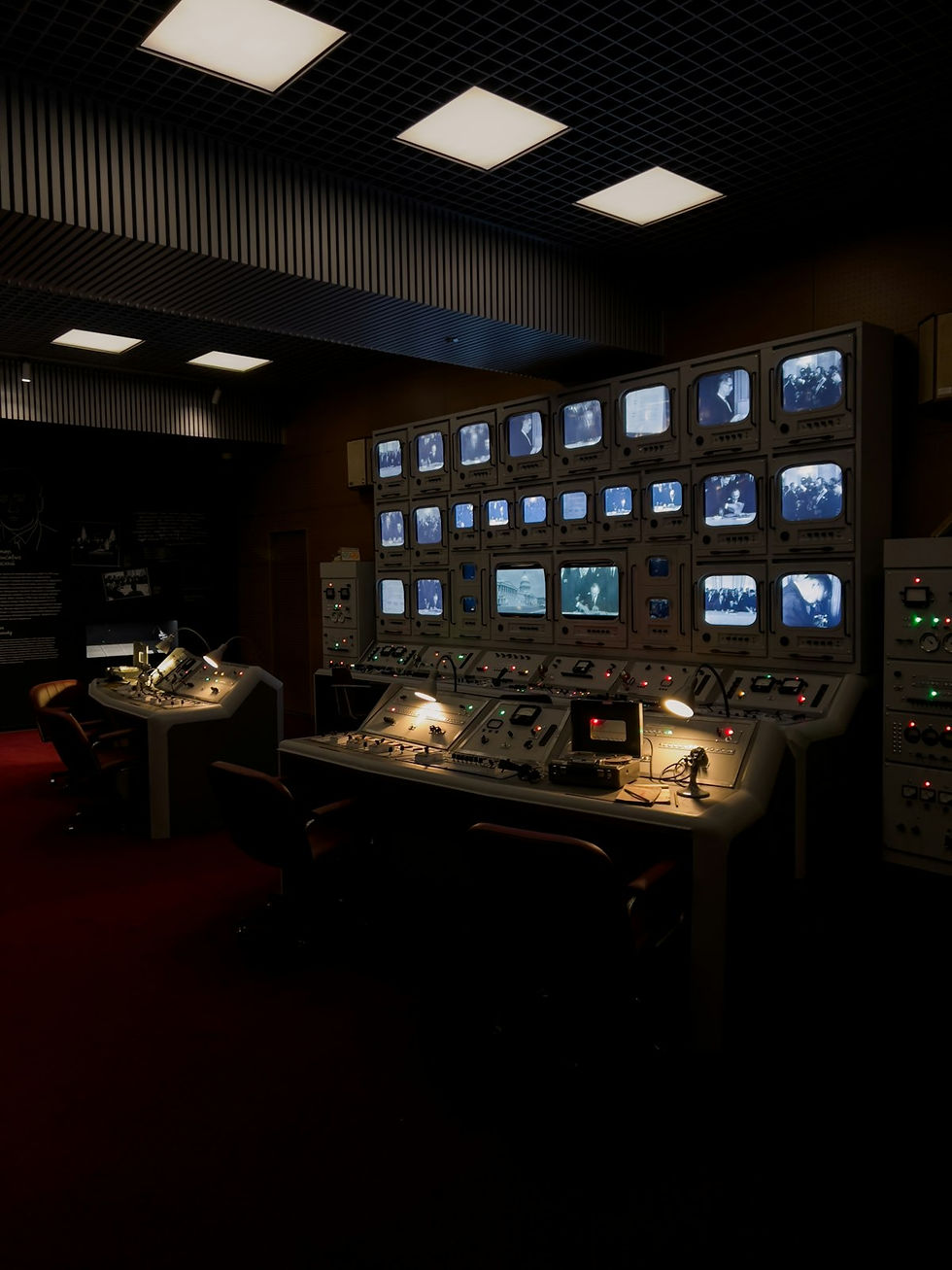
Readiness starts with a shared operational reason for using XR. “Innovation” is too broad. A useful case identifies the worker, asset, decision, risk, and measurable result. Examples include shortening a production changeover, reducing inspection variation, improving first-time maintenance completion, or letting a remote specialist support a field technician without travel.
Create a cross-functional owner group before selecting hardware. Operations owns the workflow and target outcome. Frontline workers validate usability. Safety confirms hazards and controls. IT and cybersecurity approve identity, device, network, and data handling. Learning teams define competence. Engineering governs 3D assets. A business sponsor removes barriers and protects the pilot from becoming an isolated experiment.
Readiness also depends on the use case. A spatial planning project may begin with the site’s digital twin capabilities, while a workforce program may start with immersive training and guidance. The right entry point is the one with an accountable owner, usable source material, available participants, and a baseline that can be measured before deployment.
Business readiness: named sponsor, process owner, budget boundary, and decision date.
Operational readiness: stable workflow, representative users, clear pain point, and measurable baseline.
Technical readiness: compatible devices, safe connectivity, identity controls, and support model.
Content readiness: current SOPs, accessible subject-matter experts, and approval ownership.
Choose a High-Value Pilot Workflow

The best pilot is important enough to matter but contained enough to control. Avoid choosing the most spectacular demonstration or the most complex plant process. Score candidate workflows by frequency, consequence of error, variation between operators, training burden, expert dependency, content quality, technical feasibility, and access to a representative user group.
Strong early candidates include equipment setup, inspection routes, quality gates, lockout rehearsal, contractor onboarding, maintenance diagnosis, and line changeovers. A program focused on onboarding can borrow measurement ideas from industrial XR workforce training. A ramp-up project can build on the logic of XR changeover training. These workflows repeat often enough to generate evidence and have visible consequences when knowledge is unclear.
Write a one-sentence pilot charter: “For this worker group, during this workflow, industrial XR will change this behavior and improve this metric within this period.” Then set boundaries. Identify the asset or line, user count, supported language, device class, shifts, integrations, safety exclusions, and escalation path. A bounded pilot produces a trustworthy answer; an open-ended pilot produces anecdotes.
Measure the current state before building. Capture task time, defects, skipped steps, help requests, training hours, downtime, rework, travel, and worker confidence. Without that baseline, a visually impressive prototype cannot prove improvement. Include qualitative observation as well: where do workers hesitate, reinterpret the SOP, leave the work area to find information, or wait for an expert?
Build Trusted Content, Data, and Integrations

Industrial XR content should translate approved work into spatial decisions, not copy a long PDF into a headset. Break the workflow into observable steps. For each step, define the trigger, required action, asset location, expected condition, safety constraint, evidence, exception, and escalation. Use short language and only the visual detail needed to make the next action unmistakable.
Existing CAD, BIM, scans, photographs, videos, and procedure diagrams can accelerate production, but they need optimization and governance. Decide which system owns the master asset, who approves a visual instruction, how revisions are synchronized, and when a change forces retraining. The site’s broader industrial XR technology stack should support reusable 3D assets instead of rebuilding every experience from scratch.
Integrate only what the pilot needs. Common connections include identity providers, learning management systems, CMMS or EAM work orders, MES production context, IoT signals, and document control. An inspection workflow may need the work order, asset ID, current procedure, evidence upload, and exception code—without requiring a full enterprise architecture redesign.
Security design must match plant reality. Define device enrollment, role-based access, offline behavior, network zones, log retention, camera rules, personal data handling, and remote support permissions. If AI assistance is included, restrict it to approved knowledge, show the source and uncertainty, retain an audit trail, and route safety-critical decisions to qualified people. The same guardrails apply when adding industrial AI avatars as a conversational interface.
Design and Run the Industrial XR Pilot

Design the experience around the worker’s environment. Gloves, noise, lighting, heat, restricted movement, PPE, shared devices, and intermittent connectivity affect interface decisions. Test whether hands-free interaction is truly needed or whether a rugged tablet is safer and faster. Use visual anchoring only where position matters; use simple text, audio, or video when spatial content adds no value.
Prototype the riskiest assumption first. If accurate alignment is essential, test tracking at the real asset. If the value depends on expert support, test latency, audio, annotations, and escalation. If the goal is competence, test whether practice transfers to the physical task. For high-risk work, use the principles behind XR safety training to rehearse hazards without implying that simulation replaces authorization or supervised experience.
Run the pilot in three loops. First, a controlled usability test verifies comprehension and safe interaction. Second, a supervised operational trial reveals exceptions, content gaps, and environmental failures. Third, a representative production trial measures performance across users and shifts. Keep a visible issue log and distinguish content defects, software defects, hardware limits, process problems, and adoption barriers.
Leading indicators: completion rate, active users, time in step, help requests, tracking stability, and content comprehension.
Operational outcomes: cycle time, first-time-right rate, defects, downtime, rework, expert travel, and onboarding time.
Human outcomes: confidence, cognitive load, perceived safety, supervisor trust, and willingness to reuse the workflow.
Frontline feedback is design evidence, not resistance to innovation. Observe the work and ask which prompt arrived too early, which control was awkward, what exception was missing, and where the approved process differs from reality. Close the loop quickly so workers see that reporting a problem improves the system rather than slowing deployment.
Prove ROI and Scale Across Sites

A scale decision needs more than a successful demonstration. Compare pilot outcomes with the baseline and include total operating cost: devices, content creation, integrations, support, training, sanitation, replacements, network changes, licenses, and governance. Quantify benefits in the units the business already uses—avoided downtime, reduced scrap, shorter qualification, fewer expert trips, faster changeovers, or stronger inspection completion.
Separate reusable platform value from one workflow’s return. The first pilot often carries setup costs that later use cases share: identity, device management, analytics, asset pipelines, design patterns, and content governance. Document what can be reused and what remains site-specific. This creates a credible portfolio model instead of forcing every use case to repay the entire foundation.
Scale through templates, not clones. Standardize interaction patterns, analytics, approvals, accessibility, safety reviews, and integration contracts. Allow local plants to adapt equipment references, language, regulations, and escalation roles within controlled boundaries. Organizations already using a connected worker platform can treat XR as another governed delivery channel rather than a separate island.
Create a release process for content and devices, a support route for every shift, and a dashboard that shows adoption alongside operational results. Nominate local champions, but do not make the system dependent on one enthusiast. Review the portfolio quarterly: expand proven workflows, repair weak ones, retire unused content, and feed recurring field questions back into procedures and training.
Finally, prioritize the next rollout by strategic fit and readiness, not by who asks first. The site’s industrial focus areas show how the same core capabilities can support different sectors. A repeatable industrial XR program maintains one governance model while selecting workflows that reflect each site’s assets, workforce, risk profile, and performance goals.
FAQ
What is industrial XR?
Industrial XR is the use of augmented, virtual, and mixed reality for operational work such as training, maintenance, inspection, design review, remote support, and digital twin interaction.
How long should an industrial XR pilot run?
The build and trial period should be long enough to include representative workers, shifts, and exceptions. Many pilots need several weeks of operational use after controlled testing; the decision should depend on evidence quality, not a preset demo date.
Which industrial XR use case should a company start with?
Start with a frequent, measurable workflow where inconsistency, training effort, error, downtime, or expert dependency creates visible cost. Keep the first scope bounded to one asset group, line, or worker population.
Does industrial XR require smart glasses?
No. Tablets, phones, VR headsets, and mixed reality devices serve different workflows. Choose the interface based on hands-free needs, spatial accuracy, environment, safety, comfort, and total operating cost.
How is industrial XR ROI measured?
Compare a pre-pilot baseline with task time, defects, downtime, rework, training hours, expert travel, inspection completion, and adoption. Include devices, content, integration, support, and governance in total cost.
What systems commonly integrate with industrial XR?
Common integrations include identity providers, LMS platforms, CMMS or EAM work orders, MES, ERP, IoT platforms, data historians, document control, CAD or BIM repositories, and remote collaboration tools.
How should industrial XR content be governed?
Assign content owners, approvers, revision rules, source systems, translation control, safety review, expiration dates, and audit trails. A visual instruction should never become an uncontrolled copy of an SOP.
What causes industrial XR pilots to fail?
Frequent causes include choosing a demo instead of a real workflow, lacking a baseline, copying poor procedures, ignoring frontline conditions, over-integrating too early, weak content ownership, and failing to define support and scale criteria.
Conclusion
A durable industrial XR program begins with a measurable operational problem and grows through evidence, governance, and reuse. Define ownership, choose a focused workflow, prepare trusted content, test in the real environment, measure business and human outcomes, and scale through controlled templates. That sequence turns XR from a one-off experience into dependable operational infrastructure.
Ready to identify a high-value pilot and build a practical path to scale? Talk to Mimic Industrial XR about designing immersive workflows, digital twins, training, and connected frontline experiences for your operation.


Comments